
Art and War

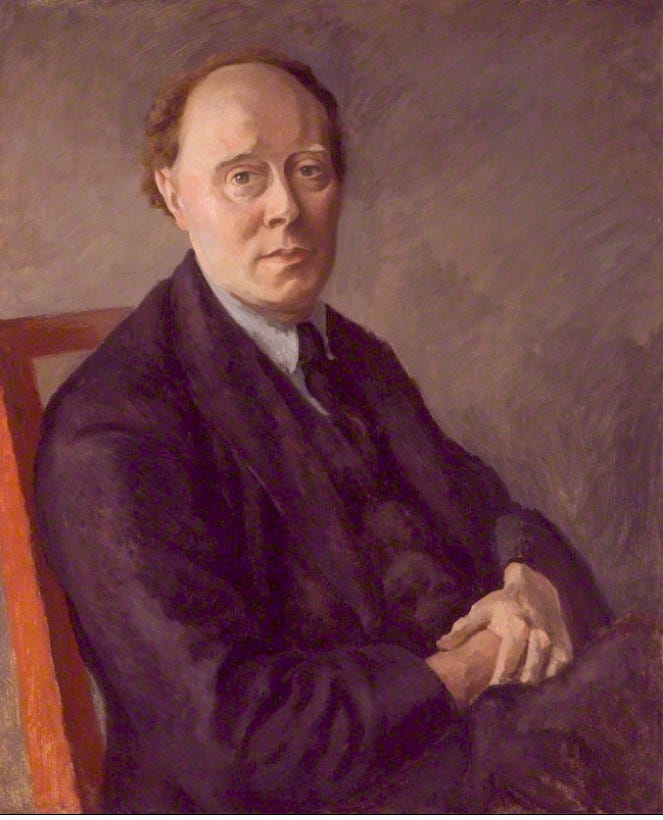
I have taken this title from the lecture Clive Bell gave to a literary society in Hampstead, England, in 1914. Bell was a member of the Bloomsbury Group, which included the novelist Virginia Woolf and the painter Duncan Grant. Though he was also a painter, their fellow Blooomsburyan Roger Fry made his strongest mark as an aesthetician. Determined to disentangle art from all “moral responsibility,” Fry argued for the cultivation of “pure vision abstracted from necessity,” whether ethical or practical. Bell’s a book-length polemic, Art, seconds Fry’s insistence on aesthetic purity. In their view, serious works of the imagination transcend ordinary life and—the crucial point—owe their value to this transcendence.
When Bell gave his lecture, England had just entered the First World War and he was appalled, not by the war so much as by the “cultivated people” (acquaintances but not friends) who “agree that this is no time for art.” Their attitude troubled him because he has “lately been taken to task for saying that the cultured regard art as no more than an elegant amenity. The war has put my opinion to the proof and I am shocked to discover how much I was in the right.”
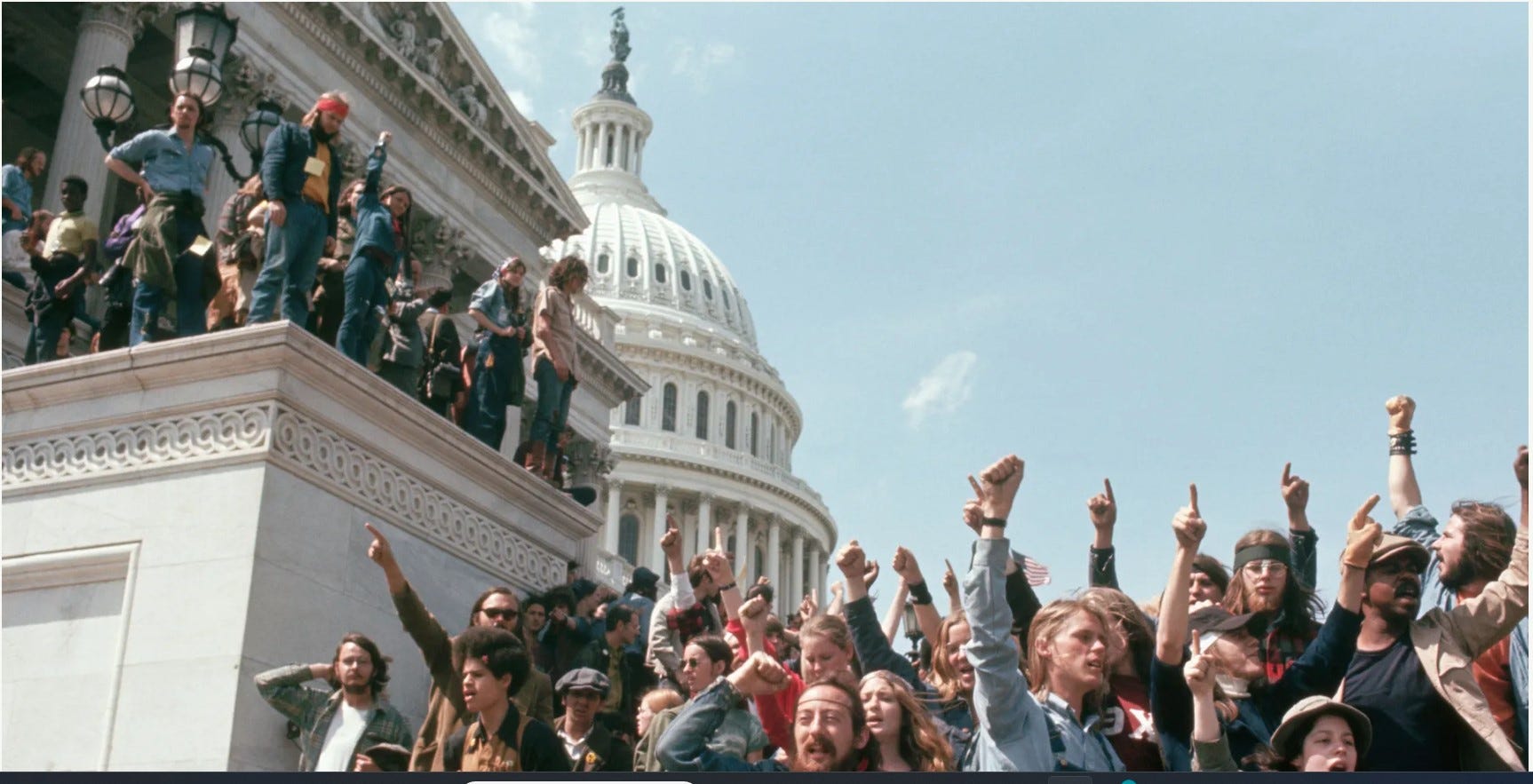
In another country during a different war, the editors of Artforum invited artists “to respond to the deepening political crisis.” The year was 1970. Anti- war demonstrations were constant; at Kent State, in Ohio, National Guardsmen had recently killed four students protesting the American invasion of Cambodia. What journalists blandly called urban unrest persisted in the aftermath of the 1968 riots and Richard Nixon had become a figurehead, of sorts, for political and social divisions almost as severe as the ones that now polarize the United States. As I remember those days, many were on edge, not to say panicked, yet the statements by artists who accepted Artforum’s invitation are either quirky (Carl Andre, Richard Serra) or calmer than you might expect. The respondents all state that art is separate from politics (the group included no Social Realists), and then say that, if you feel like taking political action, go ahead.
Donald Judd asserts art’s independence with offhand confidence, declaring that “my work didn’t have anything to do with the society, the institutions and grand theories. It was one person’s work and interests; its main political conclusion, negative but basic, was that it, myself, anyone shouldn’t serve any of these things.” Or, as Ad Reinhardt put it, “Art is art and everything else is everything else,” and one must keep them separate. Judd’s and Reinhardt’s stance rests on a foundation so familiar we hardly notice it. Call it the principle of individual freedom, which John Locke spelled out in his second essay on civil government, published in 1690.
All people, said Locke, are in “a state of perfect freedom to order their actions and dispose of their persons and possessions as they think fit, within the bounds of the law of nature, without asking leave, or depending on the will” of anyone else. Transposed into Judd’s terms, Locke’s principle grants him the freedom to serve his aesthetic purpose, his entire aesthetic purpose, and nothing but his aesthetic purpose. No other person and certainly no institution or political situation has the right to impose any limit on his freedom. Fully alive to the horrors of America and the world in 1970, Judd nonetheless refused to allow those horrors to affect the geometric clarity of his art. A corollary to the Lockean principle of personal freedom is a principle of personal integrity. If artists’s concerns are aesthetic, their work must remain untouched by society, politics, and war.
Clive Bell went further. He believed that art realizes its true meaning, its ultimate value, by conveying us to a world superior to the one where wars break out and populations suffer. This article of faith led him to drastically undervalue the ordinary world. “People who are capable of ecstasy, be it [metaphysical] or aesthetic,” says Bell “are apt to distinguish between ends and means. They know that empires and dominations, political systems and material prosperity and life itself are valuable only as means to those states of mind which alone are good as ends.” Really? Science, technology, medicine, the rule of law, and the daily maintenance of national infrastructures have no value in themselves? Are we really to believe that our sole reason for valuing these things is that they allow a minuscule portion of humanity to enjoy certain elevated experiences? If you are not an artist or an aesthete, Bell implies, the only purpose of your life is to sustain the world that provides superior beings with the leisure to transcend it. This sounds demented and yet Bell is always lucid.
Pushing the implications of his faith ever further, he arrives at the conclusion that “two things above all others give value to a civilization, art and thought. … So long as a sense of art and the disinterested passion for truth persist, the world retains some right to respectful consideration; once these disappear its fate becomes a matter of indifference. The continued existence of a stupid and insensitive world, incapable of aesthetic rapture or metaphysical ecstasy, is not particularly desirable.” The implication is that people incapable of aesthetic rapture or metaphysical ecstasy have no particularly compelling reason to live. There it is, though I don’t know what to call it. An aesthete’s monomania? Upper-middle-class English snobbery pushed to an inhumane extreme? A name is required, no doubt, yet my interest at present is in acknowledging a contradiction. Though I reject Bell’s doctrine, I have lived in accordance with it for more than half a century.
In the late 1960s, when I was becoming a poet and poetry was leading me to art criticism, the Viet Nam war continued to escalate and all the ends in sight were the product of military-political delusion. Neither I nor any of the poets I was getting to know in Manhattan paid any attention. In his response to the Artforum editors, Judd says he once joined an anti-war protest march, but as far as I know none of us ever did. After its withdrawal from Viet Nam and Cambodia, the United States took military action in Lebanon, Grenada, Libya, the Persian Gulf, Panama, Kuwait, Iraq, Somalia, the Balkans, Haiti, Afghanistan, Yemen, Pakistan, the Indian Ocean, Uganda, Niger, and Syria. Now there is grinding conflict in Ukraine, the aftermath of Hamas’s horrific assault on southern Israel, and the threat of Hezbollah in the north. As in earlier decades, I write poems and art criticism and for all practical purposes ignore the persistence of war. My detachment, I have come to realize, is as complete as Clive Bell’s
In the late 1980s, Republication senators Jesse Helms and Alphonse D’amato fell into a puritanical tizzy over iconoclastic, sexually charged work by Karen Finley, Robert Mapplethorpe, and Andres Serrano—all recipients of grants from the National Endowment for the Arts. Going on the attack, these politicians managed to get an anti-obscenity clause inserted into the NEA’s charter. Fearful of losing governmental support, the Corcoran Gallery, in Washington, D. C., cancelled a Mapplethorpe exhibition. “That,” Roy Lichtenstein told me at the time, “is why artists vote for Democrats. They usually leave you alone to do whatever you want to do.” And there you have a casual but clear echo of John Locke’s principle of individual freedom. Refined by centuries of liberal theory, this principle says that an artist’s self-realization is not self-indulgence. It is the exercise of a right.
Fine. I am well within my rights to have done what I have done, to have lived the way I have lived. But for reasons that elude me, my devotion to poetry and art is making me uneasy. Not that my devotion is about to cease. Nonetheless, as I continue with these essays, I will be asking directly and indirectly how making poems and paintings and other works of the imagination might fulfill a responsibility to something larger than the individual maker—and more substantial than some vague, transcendent notion of culture.
Note that Artforum asked only male artists in New York. Hardly a representative sampling.
The response from female artists probably would have been different.
By 1968 social/political activism was sweeping through the nation.
Other factors are in play today. We're Balkanized and echo chambered, gaslighted and anesthetized by social media 24/7. Art and its critical corollary under these circumstances are not escapist pleasures but
necessary restoratives for the psyche under stress.
Hello Carter,
Your entries keep centering the questions that matter in art with clarity and no dogmatic prescriptions. It is refreshing to read you after 12 decades of polarizing stances even on the part of art people I agree with.
- Having started thinking of art in Italy before becoming American and a New York artist, I grew up torn between the ever-renewed opposite opinions about art's role in the dysfunctional modern world. On the one hand I feel I should not feel guilty if I paint a flower painting, on the other, the despair of the permanent injustice of our global order and knowing that my privilege is often protected by the very forces I oppose make me feel I am a hypocrite. But I find it too easy to be dogmatically assertive only in favor of aesthetics or only in favor of militant engagement. My instrument has been what I call Operational Dilemma, i.e. if we operate without fettering ourselves to general preliminary choices but allow a wide range of possibilities, each exactly formed within its terms, we may one day produce a decorative surface and the next day make a work that denounces an abuse - a much more demanding approach than being adamantly sure of one or another stance.
In other words, while we moderns are still looking for general final solutions which inevitably lead to paralysing polarizations, we may instead nurture the many languages available that allow us to apply inspiration and pressure where we wish. The sensibility, being unequivocally true to ourselves, that links our diverse doings is where the art may be.
Be well, Lucio.